
 Home
Home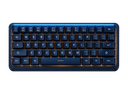 Lessons
 Courses
 Practice
 Typing
 Tests
Tests Reflexes
 Games
Games Kids
Kids Dyslexia
 Guides
 Badges
 Certif.
 Planner
 Pomodoro
 Notes
Notes Music
Music Schools
 PLUS
PLUSBack in the early 1880s, the notable German philosopher Friedrich Nietzsche, his eyesight failing so badly that ordinary reading and writing by hand had become a source of genuine, constant physical pain, acquired a strange, spherical, purely mechanical writing device known as a Malling-Hansen writing ball, first invented by a Danish clergyman roughly a decade earlier still. Nietzsche patiently taught himself to type on it while nearly blind, and in one short piece of writing he produced directly on the machine itself, he observed something that would later go on to become one of the most frequently quoted lines in the entire philosophy of technology: "Our writing tools are also working on our thoughts." Nietzsche was in his late thirties when he learned to type, a genuine adult learner adapting to an entirely new physical skill out of real necessity rather than childhood habit, and his experience captures something that remains genuinely true in Germany today, a country that has built an entire respected national infrastructure around the conviction that learning a demanding new skill as an adult is not a lesser, compromised version of childhood learning but a serious, achievable undertaking deserving real institutional support.
Learning to type as an adult, the specific focus of this lesson, sits at the centre of a genuinely large and well-organised part of German public life: the Volkshochschule system, a network of publicly supported adult education centres found in virtually every German town and city, offering courses ranging from language instruction to vocational skills to, very much including, typing and computer literacy for adults who did not grow up with a keyboard as a natural part of daily life. Understanding Germany's relationship with typing means understanding this broader German cultural conviction, expressed through the concept of Weiterbildung, or continuing education, that genuine competence can be built at any stage of adult life through structured, patient instruction, exactly the same conviction that let a nearly blind philosopher in his late thirties become a genuinely proficient typist on a machine invented by a stranger in another country entirely.
Germany's typewriter history begins in the final decades of the nineteenth century, with German manufacturers quickly establishing their own significant domestic industry alongside imported Remington machines, producing typewriters adapted specifically for German, a language that, unlike English, required dedicated keys for the umlauted vowels ä, ö, and ü, along with the distinctive German letter ß, known as the eszett or scharfes S, characters with no direct equivalent on the American or British keyboards already documented throughout this account. This need to accommodate German's own specific characters led directly to the development of QWERTZ, the German keyboard layout that keeps most of the familiar QWERTY arrangement intact but swaps the positions of the Y and Z keys, reflecting the fact that Z appears considerably more frequently in written German than in English, while Y is comparatively rare, a small, sensible adaptation that nonetheless still surprises English-speaking typists encountering a German keyboard for the very first time.
Germany's approach to standardising business and administrative typing conventions reached a level of thoroughness with few real parallels elsewhere in this broader account, formalised through DIN 5008, a national standard developed by the German Institute for Standardisation that specifies exact formatting conventions for typed business letters, including precise margins, spacing, and the placement of dates, addresses, and reference lines. German secretarial and administrative training has, for generations, taught DIN 5008 as a matter of basic professional competence, reflecting a broader German cultural instinct toward standardisation and precision that runs through the country's approach to manufacturing, engineering, and, evidently, even the formatting of an ordinary typed business letter.
Germany's contribution to the global mechanical keyboard industry runs deeper than almost any other country examined throughout this account, anchored by Cherry, a company whose MX switches, first developed in the 1980s, became the genuine international standard against which virtually every other mechanical keyboard switch is still measured today. Cherry's switches, distinguished by colour-coded designations indicating their tactile feel and actuation force, from the crisp, clicky Cherry MX Blue to the smooth, linear Cherry MX Red, are manufactured with the same exacting German engineering precision already documented in the country's automotive and industrial manufacturing sectors, and the company's decades-long dominance of the switch market means that a genuinely significant share of the world's mechanical keyboards, regardless of which country actually assembled the finished product, rely on components engineered in Germany.
Germany's dual education system, known as the duale Ausbildung, combines classroom instruction with structured on-the-job training across a genuinely wide range of vocational trades and administrative professions, a system that has historically incorporated typing and office administration training as a formal, certified component of clerical apprenticeships, producing generations of German office workers whose typing competency was verified through the same rigorous combination of practical assessment and theoretical instruction that characterises German vocational training more broadly. This system, widely admired internationally and frequently cited as a model other countries have studied when reforming their own vocational education, reflects the same underlying German conviction already discussed at the opening of this account: that practical skills, typing very much included, deserve structured, patient, professionally certified instruction rather than being left to informal, haphazard learning.
Germany's reunification in 1990 brought a genuinely significant, often overlooked chapter to the country's typing history, as East German workers, trained under the German Democratic Republic's own separate administrative and clerical systems, needed to adapt to West German office technology, standards, and increasingly the same QWERTZ keyboard conventions already standard in the West, though the underlying layout itself had remained largely consistent across both German states throughout the Cold War division. East German typewriters, produced domestically under state manufacturing programmes largely cut off from Western commercial developments, had followed their own separate design evolution for four decades, and the sudden reunification of two German administrative systems required considerable retraining and adaptation for East German clerical workers integrating into a unified German economy and civil service.
Germany's approach to workplace ergonomics regulation, formalised through both national labour law and the broader European Union display screen equipment directive already discussed in the context of Britain and Ireland earlier in this account, reflects the same thoroughness already visible in DIN 5008's business letter formatting standards, with German workplace safety regulations specifying detailed requirements for keyboard positioning, screen height, and mandatory breaks that German employers are legally required to implement rather than simply encouraged to consider.
Germany's automotive and precision manufacturing industries, home to globally significant companies including Volkswagen, BMW, Mercedes-Benz, Siemens, and Bosch, generate an enormous volume of accurate technical documentation, engineering specifications, and quality control reporting, work that depends on exactly the same meticulous attention to detail that has made German engineering internationally synonymous with reliability and precision. German engineers and technical writers producing this documentation understand implicitly that a single typing error in a technical specification could have consequences considerably more serious than an ordinary office memo, a standard of accuracy consistent with the exacting engineering culture already documented throughout Germany's broader industrial reputation.
Germany's legal system, one of the most influential civil law traditions in the entire world and the direct model for legal systems across large parts of Europe and beyond, depends on legal secretaries and court administrative staff capable of producing accurate typed documentation formatted according to exacting German legal and administrative conventions, work that carries genuine weight within a judicial system renowned for its thoroughness and procedural precision.
Germany's healthcare system, combining statutory and private insurance within one of the most comprehensive universal healthcare frameworks in Europe, depends on clinical staff capable of typing accurate patient records efficiently across a network of hospitals and practices that has increasingly digitised over the past decade, though somewhat more cautiously and with greater attention to data privacy regulation than some other countries examined throughout this account, reflecting Germany's own particularly strong cultural and legal emphasis on personal data protection.
Germany's banking sector, anchored by major institutions including Deutsche Bank and a substantial network of regional savings banks and cooperative banks, generates the same steady volume of accurate financial documentation already documented across every developed banking sector examined throughout this account, with German financial institutions maintaining a reputation for conservative, meticulous record-keeping consistent with the country's broader cultural emphasis on precision and reliability.
Germany's civil service examination tradition, historically demanding and closely tied to the country's respected Beamtentum, or career civil servant system, has required rigorous typing and administrative competency for clerical positions, with German civil service training academies, known as Verwaltungsakademien, offering structured typing and office administration instruction as part of a broader professional certification pathway that carries genuine social and professional prestige within German public administration.
Germany's freelance and remote work economy, known locally by the English loanword Freelancing or the German term Selbstständigkeit, has grown steadily in recent years, though somewhat more cautiously than in some other countries examined throughout this account, reflecting Germany's traditionally strong cultural preference for stable, permanent employment with comprehensive social insurance coverage, a preference that has shaped how German freelancers approach remote, typing-dependent work compared to freelancers in less socially insured economies.
Germany's competitive esports and gaming scene has grown substantially in recent years, with Germany hosting major international tournaments and producing professional players competing across several globally popular titles, many of which depend heavily on players typing quick strategic communication to teammates without ever losing focus on a fast-moving match, a pattern already well documented across Australia, Canada, and Singapore earlier in this broader survey.
Germany's journalism and publishing industry, among the largest and most influential in continental Europe, built its own version of the newsroom deadline culture common to journalism throughout this broader account, with German reporters and editors depending on efficient typing to produce accurate news copy under genuine deadline pressure across the country's substantial network of national and regional newspapers.
Germany's approach to disability rights and assistive technology has produced genuinely sophisticated adapted keyboards and input systems for German users with physical disabilities, supported by strong national disability rights legislation and Germany's broader tradition of thorough, well-funded social welfare provision, with German assistive technology researchers and manufacturers, including several building directly on Cherry's own switch engineering expertise already discussed earlier in this account, producing adapted keyboard hardware genuinely respected internationally for its build quality and reliability.
Germany's competitive online typing community draws on the country's strong general internet culture and excellent digital infrastructure, with German participants in global online typing platforms frequently posting results that place them respectably among international competitors, and German typing enthusiasts, much like the country's mechanical keyboard community more broadly, tend to bring the same meticulous, detail-oriented approach to competitive typing that characterises German engagement with precision hobbies more generally.
Germany's public Volkshochschule adult education network, already introduced at the opening of this account, deserves closer examination given its genuinely central role in German typing and digital literacy instruction. Established in various forms since the early twentieth century and expanded considerably after both world wars as part of Germany's broader civic education efforts, the Volkshochschule system today operates in nearly every German municipality, offering affordable, publicly subsidised courses to adults of any age and educational background, with basic and intermediate computer and typing literacy consistently ranking among the most popular course offerings, particularly among older Germans and immigrants building the digital skills necessary to participate fully in German professional and civic life.
Germany's approach to workplace typing culture within its dominant engineering and technology sectors treats fast, accurate typing as such a thoroughly assumed baseline professional competency that it rarely receives explicit separate mention in job postings, precisely because Germany's rigorous vocational and university education systems already ensure that the overwhelming majority of the country's professional workforce arrives comfortably keyboard fluent well before their very first day of employment.
Germany's public library network, spread across the country's states and municipalities alongside the Volkshochschule system already discussed extensively throughout this account, has become an important additional venue for free typing and digital literacy instruction, particularly for older Germans and recent immigrants navigating an increasingly digital German society, with librarians running these programmes describing the same quiet, meaningful transformation already documented among counterparts in Australia, Canada, and Ireland earlier in this survey.
Germany's approach to preparing students for standardised computer-based testing has increasingly incorporated structured typing instruction earlier in the school curriculum, with German educators recognising, much as their counterparts across Australia, Canada, and Ireland have separately concluded, that a student's typing fluency can meaningfully affect their measured performance on timed computer-based examinations, a concern that has grown as more German state education authorities shift school examinations toward digital formats.
Germany's growing prominence in international remote software development has been aided considerably by the country's strong computer science education tradition, with German universities and technical colleges, known as Fachhochschulen, producing graduates whose programming and typing fluency finds ready employment both within Germany's substantial domestic technology sector and increasingly within international companies actively recruiting German engineering talent.
Germany's telecommunications and broadband infrastructure, while historically somewhat slower to modernise in certain respects than some smaller, more centrally coordinated countries examined earlier in this account, has expanded considerably in recent years, bringing improved digital access to previously underserved rural German regions and supporting the growth of remote, typing-dependent work opportunities for German residents living outside the country's major cities.
Germany's growing prominence in international remote game development and testing services, building on a domestic gaming industry that has grown considerably over the past two decades, depends on developers and quality assurance testers whose daily work requires sustained, comfortable keyboard fluency, contributing to a global gaming industry that German studios have increasingly shaped through both original titles and technical infrastructure work.
Germany's approach to workplace disability accommodation within its technology sector specifically has drawn on the country's strong social welfare tradition, with several of Germany's larger technology and engineering companies investing significantly in adapted keyboards and assistive software for employees with physical disabilities as part of a broader, legally reinforced commitment to workplace inclusion.
Germany's growing prominence in international remote translation and localisation services, building on the country's central position within the European Union and its strong multilingual education tradition, has positioned Germany as a significant hub for adapting software, websites, and technical documentation across European languages, with German localisation specialists depending on genuine multilingual typing fluency to support this considerable service industry.
Germany's small business and Mittelstand economy, the network of small and medium-sized, often family-owned companies widely credited with anchoring German economic stability and technical excellence across countless specialised industrial niches, has increasingly adopted digital tools for administration, customer communication, and international sales correspondence, meaning that basic typing competency has spread considerably across countless small, specialised German businesses well beyond the country's large multinational corporations.
Germany's story of typing, drawn together across a nearly blind philosopher learning to type on a Danish writing ball in his late thirties, a Cherry factory engineering the switches that define mechanical keyboards worldwide, a Volkshochschule classroom teaching an elderly German citizen to navigate a computer for the very first time, and a Mittelstand engineering firm producing technical documentation with the same precision it applies to its physical products, resists any single tidy summary just as thoroughly as every other country examined throughout this broader account. What unites these threads instead is a distinctly German conviction that serious competence, whether in engineering, typing, or simply navigating a keyboard for the first time as an adult, is built through structured, patient, well-supported practice rather than left to chance or dismissed as something only the young can genuinely master.
Germany's approach to workplace productivity culture within its dominant industrial and technology sectors treats sustainable, ergonomically sound typing habits as directly connected to the same long-term thinking that characterises German industrial planning more broadly, with German employers, reflecting a cultural instinct toward careful, methodical planning already visible throughout this account, generally taking a longer-term view of employee wellbeing than employers in some faster-moving economies examined elsewhere in this survey.
Germany's growing prominence in international remote financial analysis and investment research support, building on Frankfurt's status as one of the most significant financial centres in continental Europe, depends on analysts capable of typing accurate financial reports and research documentation for domestic and international investment clients.
Germany's growing prominence in international remote patent and intellectual property documentation support, building on the country's globally significant record of engineering patents already implicit in its manufacturing reputation, depends on specialised technical writers capable of typing precise, accurate patent documentation, a highly specialised category of German typing-dependent professional work combining deep technical understanding with genuine typing fluency.
Germany's growing prominence in international remote environmental and sustainability consulting has created demand for analysts capable of typing detailed compliance and impact assessment reports, particularly significant given Germany's own ambitious national climate policy commitments and its considerable domestic expertise in renewable energy engineering.
Germany's approach to preparing rural and regional communities for digital and typing literacy has increasingly relied on regional government initiatives bringing basic computer and typing training directly to smaller German towns, part of a broader national effort to keep regional Germany economically viable and digitally connected as the country's population continues shifting toward larger metropolitan areas.
Germany's growing prominence in international remote e-commerce operations support for German online retail platforms, among the most significant in continental Europe, has created demand for staff managing product listings, customer correspondence, and order processing, work that depends on comfortable typing fluency within a German e-commerce market known for its detail-oriented, quality-conscious consumer base.
Germany's approach to preparing its workforce for automation and artificial intelligence disruption has placed particular emphasis, within its major industrial and technology companies, on retraining programmes that help workers transition toward higher-value technical roles, addressing genuine concerns similar to those already documented in Japan's own approach to workforce transition earlier in this account, adapted to Germany's own strong tradition of structured vocational retraining through the Ausbildung system already discussed at length.
Germany's growing prominence in regional venture capital and startup investment, concentrated particularly in Berlin, which has developed into one of the most significant startup ecosystems in continental Europe, has produced a genuine wave of homegrown German technology companies alongside the country's traditional industrial giants, with German founders and engineers depending on exactly the same fast, accurate typing fluency valued by technology companies everywhere else examined throughout this account.
Germany's growing prominence in international remote quality control for manufacturing documentation, building on the country's globally respected reputation for manufacturing precision already discussed throughout this account, has created demand for quality assurance specialists capable of typing accurate inspection and compliance reports for manufacturing operations both within Germany and at German-owned facilities operating internationally.
Germany's growing prominence in international remote academic and research support services, including manuscript editing, data analysis support, and research assistance for German and international academics, has created a specialised category of German typing-dependent professional employment, drawing on the country's strong higher education tradition and considerable pool of postgraduate-qualified professionals seeking flexible remote work opportunities.
Germany's growing prominence in international remote healthcare documentation and medical transcription services has created demand for workers trained to accurately type physician dictation and clinical notes, particularly within Germany's own substantial private healthcare and medical tourism sector, which attracts international patients seeking treatment at German hospitals renowned for medical precision and thoroughness.
Germany's growing prominence in international remote virtual assistance for small businesses has created demand for professionals capable of managing email correspondence, scheduling, and basic administrative tasks, drawing on Germany's large pool of skilled, multilingual professionals seeking flexible work arrangements outside the country's traditionally structured permanent employment model.
Germany's growing base of remote SEO and digital marketing specialists supporting German and international companies depends on comfortable typing fluency to manage the considerable volume of content and campaign documentation modern digital marketing requires within one of Europe's largest and most economically significant consumer markets.
Germany's growing base of remote paralegal and contract review specialists supporting international law firms with Germany-related business depends on exactly the same combination of legal precision and genuine typing fluency already documented throughout the legal sections of this broader account, work that has expanded considerably as international firms increasingly engage with Germany's substantial economy and complex regulatory environment.
Germany's growing base of remote logistics and supply chain coordination support, building on the country's considerable experience managing complex, precisely timed manufacturing and distribution networks already discussed throughout this account, depends on coordinators capable of typing accurate shipping, inventory, and scheduling documentation for global supply chain clients relying on German manufacturing and logistics expertise.
Germany's growing base of remote community moderators supporting German-language online gaming and social media communities depends on fast, accurate typing to manage real-time discussions across substantial, engaged German-speaking user bases spanning Germany, Austria, and Switzerland.
Germany's growing base of remote proofreading and copyediting specialists supporting German publishers and international companies producing German-language content depends on meticulous, detail-oriented typists capable of catching even the smallest errors, work that rewards exactly the same combination of speed and unwavering accuracy already documented throughout this broader account.
Germany's growing base of remote research assistants supporting think tanks and policy institutes across Europe depends on comfortable typing fluency to produce accurate briefing documents and analysis under genuine deadline pressure, drawing on Germany's substantial influence within European Union policy discussions given the country's economic and political weight within the bloc.
Germany's growing base of remote video editing and post-production support for German media and entertainment content depends on editors capable of typing accurate metadata, subtitles, and project documentation, supporting Germany's substantial domestic film and television production industry.
Germany's growing base of remote human capital and payroll administration support for German companies managing increasingly international workforces depends on specialists capable of typing accurate employee records and compliance documentation across multiple countries and regulatory systems, particularly significant given Germany's own complex and thorough labour law framework.
Germany's growing base of remote market research and consumer insight support depends on analysts capable of typing detailed reports for companies seeking to understand German and broader European consumer behaviour, drawing on Germany's own considerable domestic market research expertise.
Germany's growing base of remote actuarial and risk analysis support for German and international insurance firms depends on analysts capable of typing precise, accurate technical reports, drawing on Germany's strong mathematical and engineering education tradition already discussed throughout this account.
Germany's growing base of remote grant writing and research funding administrative support has created demand for professionals capable of typing accurate, persuasive funding proposals and compliance documentation for German research institutions increasingly seeking international collaboration and European Union funding partnerships.
Germany's growing base of remote real estate and property management administrative support depends on coordinators capable of typing accurate listings, correspondence, and transaction documentation within one of Europe's largest property markets.
Germany's growing base of remote travel and hospitality booking support for Germany's substantial domestic and inbound tourism industry depends on coordinators capable of typing accurate reservations, itineraries, and customer correspondence across multiple languages for international visitors.
Germany's public sector organisations and state-affiliated enterprises continue to employ substantial administrative workforces whose accurate, efficient typed documentation supports the ongoing functioning of some of the country's largest employers, a further reminder that Germany's typing story spans not only its celebrated industrial and technology sectors but the enormous administrative apparatus governing Europe's largest economy.
Germany's growing prominence in international standards-setting bodies for manufacturing, engineering, and increasingly digital technology reflects the country's broader diplomatic and industrial strategy of building influence through genuine technical excellence, a strategy that depends, at every practical level, on German delegates and technical experts capable of producing precise, accurate typed contributions to international technical negotiations.
Germany's growing prominence in international conferences and diplomatic hosting, drawing on the country's central position within the European Union and its reputation for meticulous organisation, generates substantial temporary demand for accurate diplomatic documentation and interpretation support during major international summits and negotiations held on German soil.
Germany's growing base of youth entrepreneurship support through government and private incubator programmes increasingly treats typing and coding fluency as foundational skills worth cultivating early, part of Germany's broader effort to nurture a more dynamic startup culture within an economy traditionally anchored by large, established industrial corporations and the Mittelstand already discussed earlier in this account.
Germany's growing prominence in international remote content moderation for German-language platforms depends on workers capable of typing accurate, rapid moderation decisions across Germany's substantial domestic social media and online community platforms, a genuinely demanding category of work that combines linguistic precision with fast, sustained typing.
Germany's growing base of remote data annotation and machine learning training data specialists supporting the artificial intelligence systems increasingly deployed by both German and international technology companies depends on accurate, efficient typing to help train systems that must correctly process German alongside other world languages, a genuinely significant technical contribution given Germany's own considerable investment in artificial intelligence research.
Germany's growing base of remote craft food and beverage export documentation support, covering Germany's globally admired beer, wine, and specialty food exports, depends on accurate export documentation and increasingly sophisticated digital marketing correspondence to reach international buyers seeking authentic German products.
Germany's local government sector, spread across its sixteen federal states and thousands of municipalities, generates a steady stream of typed planning documentation, administrative reporting, and public correspondence, work that in smaller, more rural municipalities often falls to a genuinely small administrative team managing considerable responsibility relative to their limited numbers, a pattern already documented across numerous other countries examined throughout this broader account.
Germany's growing prominence in remote insurance and reinsurance documentation support, drawing on Munich's position as home to some of the largest reinsurance companies in the entire world, depends on staff capable of processing accurate claims and policy documentation at genuinely enormous scale across a customer base spanning the entire European continent and well beyond.
Germany's growing base of remote academic peer review and journal editorial support for German and international scientific publications depends on comfortable typing fluency to manage the considerable correspondence and documentation involved in modern academic publishing, drawing on Germany's substantial contribution to European scientific research output.
Germany's growing base of remote virtual event coordination for conferences and business gatherings depends on professionals capable of typing accurate scheduling, correspondence, and logistical documentation, an area of work that expanded considerably following the broader global shift toward virtual and hybrid events, particularly significant for Germany given its role hosting major international trade fairs including those in Hannover, Frankfurt, and Berlin.
Germany's growing base of remote accounting and bookkeeping support for German small businesses expanding internationally depends on accurate typed financial documentation, drawing on Germany's strong tradition of meticulous financial record-keeping already reflected throughout this broader account.
Germany's growing base of remote translation quality assurance for German-English and other European language localisation projects depends on meticulous bilingual reviewers whose accurate typed corrections and feedback maintain the quality standards German content producers are known for internationally.
Germany's growing base of remote HR and recruitment support for German companies increasingly hiring international talent depends on staff capable of typing accurate correspondence and onboarding documentation for a workforce that has become considerably more internationally diverse than at any earlier point in Germany's modern economic history, driven partly by the country's own persistent skilled labour shortages in engineering and technology fields.
Germany's growing base of remote sports journalism and broadcast support, covering Germany's passionate football following alongside other major international sporting events, depends on writers and production staff capable of typing accurate commentary and reporting under genuine live deadline pressure.
Germany's growing base of remote inventory and warranty claims processing for Germany's globally significant automotive and electronics exports depends on accurate, efficient typing to manage customer claims across international markets relying on German product quality and support.
Germany's growing base of remote data entry and archival digitisation support for German libraries and cultural institutions depends on patient, accurate typists converting historical German documents into searchable digital records for researchers worldwide, a genuinely significant undertaking given Germany's vast historical archives spanning centuries of European history.
Germany's growing base of remote survey response coding and analysis specialists supporting German and international research firms depends on precise, efficient typing to process large volumes of consumer and public opinion data, drawing on Germany's strong tradition of rigorous social research methodology.
Germany's growing base of remote UX and product design services depends on designers whose work requires comfortable typing fluency for both written communication with international clients and increasingly for coding basic prototype interactions, extending Germany's substantial engineering and design workforce into the same globally connected remote services economy already documented across every other country examined throughout this account.
Germany's growing prominence in international remote cybersecurity, reflecting substantial government and private investment in protecting the country's critical digital infrastructure, has produced a genuine cluster of cybersecurity expertise whose professionals depend on exactly the same precise, error-intolerant typing fluency already discussed in the context of programming and technical work throughout this account, particularly significant given Germany's own strong legal emphasis on data protection already discussed earlier in this survey.
Germany's approach to workplace typing culture within its dominant retail and consumer goods sector has increasingly incorporated typing-dependent digital customer engagement, with German retailers, known for a certain reserved, efficiency-focused approach to customer service quite different from the warmth-focused hospitality traditions documented in other countries throughout this account, adapting digital tools in a manner consistent with the country's broader cultural emphasis on functional reliability over performative friendliness.
Germany's growing prominence in international remote market research and consumer insight support depends on analysts capable of typing detailed reports drawing on Germany's own famously rigorous and methodical research traditions, work that international companies increasingly value given the thoroughness of German market analysis methodology.
Germany's growing prominence in remote technical writing and documentation services for German engineering and manufacturing exports depends on writers capable of producing clear, accurate bilingual technical documentation for products used by customers worldwide, a specialised category combining strong German and English writing skills with genuine technical understanding rooted in the country's engineering education tradition.
Germany's approach to workplace wellness increasingly incorporates ergonomic assessments as standard practice at larger employers, building on the country's already strong occupational health and safety legal framework already discussed earlier in this account, with company health programmes gradually expanding to include specific attention to the physical toll of sustained keyboard and screen use.
Germany's growing prominence in remote administrative support for German cultural institutions, including museums, theatres, and heritage sites increasingly managing international visitor bookings and digital cataloguing, depends on staff capable of typing accurate multilingual documentation to serve Germany's substantial international tourism audience.
Germany's approach to workplace typing culture within its dominant construction and infrastructure sector depends on engineers and administrators capable of typing precise technical and safety compliance documentation, work that reflects the same exacting engineering standards already documented throughout Germany's broader industrial reputation.
Germany's growing prominence in international remote video game localisation testing, ensuring that games function correctly and read naturally once translated into German for one of Europe's largest gaming markets, depends on testers capable of typing precise, detailed bug reports and linguistic feedback.
Germany's growing base of remote inventory cataloguing and product data specialists supporting German e-commerce platforms depends on accurate, efficient typing to process the enormous volume of product listings that Germany's detail-oriented online retail market demands.
Germany's growing base of remote virtual assistance for small businesses supporting entrepreneurs and small business owners across Europe depends on comfortable, reliable typing fluency and has become an increasingly accessible entry point into flexible remote work for Germans seeking alternatives to the country's traditionally structured permanent employment model.
Germany's growing base of skilled court reporters and legal transcriptionists continues to serve the country's judicial system, building on Germany's long-established legal training tradition already discussed earlier in this account, now increasingly adapted to serve remote transcription needs across the wider German-speaking legal community spanning Germany, Austria, and Switzerland.
Germany's growing prominence in international remote quality assurance for software testing depends on detail-oriented technical workers capable of typing precise, accurate bug reports and testing documentation, a genuinely essential but often overlooked category of Germany's broader technology workforce whose careful, patient typed documentation quietly supports software reliability.
Germany's growing prominence in remote administrative support for schools and universities based abroad, handling admissions correspondence and student records processing for German institutions increasingly recruiting international students, further illustrates the breadth of typing-dependent work supporting Germany's education sector as it becomes more internationally connected.
Germany's growing base of remote patent examination support for the European Patent Office, headquartered in Munich, depends on examiners and administrative staff capable of typing precise, accurate technical assessments across patent applications submitted from countries throughout Europe and beyond.
Germany's growing prominence in remote financial compliance and regulatory reporting support, reflecting the European Union's increasingly complex financial regulatory environment, depends on specialists capable of typing accurate compliance documentation for financial institutions operating across German and broader European markets.
Germany's growing base of remote customer feedback analysis for automotive and consumer electronics brands depends on analysts typing detailed reports drawing on Germany's meticulous quality culture already discussed extensively throughout this account, work that international clients value precisely because German analytical rigour has become internationally synonymous with reliability.
Germany's growing base of remote scientific peer review coordination for German and international research institutions depends on comfortable bilingual typing fluency to keep pace with the considerable volume of correspondence modern academic and scientific publishing generates across European research networks.
Germany's growing base of remote content licensing and rights administration support for German media and entertainment exports depends on staff typing accurate contractual and correspondence documentation across international markets increasingly interested in German film, television, and gaming content.
Germany's growing base of remote inventory and warehouse management coordinators supporting German and international logistics companies depends on accurate, efficient typing to keep some of the most tightly scheduled supply chains in Europe functioning smoothly, reflecting Germany's globally admired reputation for precise, reliable logistics coordination centred on its extensive rail and shipping infrastructure.
Germany's growing base of remote research and development documentation support for German pharmaceutical and biomedical companies depends on the same category of zero-tolerance-for-error regulatory documentation already discussed extensively in the context of Ireland's and India's own pharmaceutical sectors earlier in this account, with quality assurance staff working within Germany's substantial pharmaceutical research base depending on genuinely meticulous typing accuracy as a direct matter of patient safety and international regulatory compliance.
Germany's growing base of remote proofreading support for German academic journals and technical publications depends on meticulous typists whose careful attention to detail mirrors the same precision Germany applies throughout its engineering and manufacturing sectors already documented at length throughout this broader account.
Germany's growing base of remote e-learning content development depends on professionals capable of typing accurate, engaging educational content for online learning platforms, an area of work that has grown considerably alongside Germany's own broader investment in digital education infrastructure following the disruptions of the early 2020s.
Germany's approach to workplace productivity within its dominant chemical and pharmaceutical industries, home to globally significant companies including BASF and Bayer, generates the same category of precise, accuracy-critical technical documentation already discussed throughout this account, work performed to standards consistent with Germany's broader reputation for chemical engineering excellence.
Germany's growing base of remote administrative support for German non-profit and cultural funding bodies depends on professionals capable of typing accurate, persuasive proposals and compliance documentation, reflecting Germany's substantial public investment in cultural and civic institutions relative to many other economies examined throughout this account.
Germany's growing prominence in remote logistics documentation for its extensive rail freight network, among the most significant in Europe, depends on coordinators capable of typing accurate scheduling and cargo documentation supporting the movement of goods across the entire continent.
Germany's growing base of remote conference interpretation scheduling and coordination support, significant given Germany's role hosting numerous European Union and international institutional meetings, depends on staff capable of typing accurate multilingual logistics documentation under genuine time pressure.
Germany's approach to workplace typing culture within its dominant renewable energy sector, a genuine national priority given Germany's ambitious Energiewende policy transitioning the country away from fossil fuels, depends on engineers and administrators capable of typing precise technical and regulatory documentation supporting one of the most significant energy transitions attempted by any major economy examined throughout this account.
Germany's growing base of remote support for its substantial network of research institutes, including the Max Planck Society and Fraunhofer Society, both internationally respected for scientific and applied research excellence, depends on administrative and research support staff capable of typing accurate grant documentation, correspondence, and technical reports across a research infrastructure that has produced numerous Nobel laureates and significant scientific breakthroughs.
Germany's growing prominence in remote support for its wine and spirits export industry, particularly German Riesling and other wines increasingly recognised internationally, depends on accurate export documentation and digital marketing correspondence reaching buyers across the world.
Germany's growing base of remote administrative support for its substantial trade union movement, historically among the most influential in Europe and directly responsible for shaping the strong worker protections already discussed throughout this account, depends on staff capable of typing accurate member communications, negotiation documentation, and policy analysis.
Germany's growing base of remote support for its cooperative banking sector, including the extensive network of regional Sparkassen savings banks that serve communities across the entire country, depends on administrative staff capable of typing accurate customer documentation consistent with the conservative, community-focused banking tradition these institutions have maintained for generations.
Germany's growing base of remote support for its substantial classical music and opera institutions, among the most significant in the world, depends on administrative staff capable of typing accurate scheduling, ticketing, and correspondence documentation for cultural institutions that draw visitors from across the entire globe.
Germany's growing base of remote support for its extensive network of technical inspection organisations, including TÜV, responsible for the rigorous safety inspections German engineering and manufacturing is internationally known for, depends on inspectors and administrative staff capable of typing precise, accurate compliance documentation.
Germany's growing base of remote administrative support for its substantial football league system, including the Bundesliga, one of the most attended and commercially significant football leagues in the entire world, depends on club administrative staff and media professionals capable of typing accurate scheduling, ticketing, and press documentation under genuine matchday pressure.
Germany's growing base of remote administrative support for its substantial network of chambers of commerce, which play a genuinely significant regulatory and advisory role within the German economy quite distinct from equivalent bodies in some other countries examined throughout this account, depends on staff capable of typing accurate member correspondence and regulatory guidance documentation.
Germany's growing base of remote support for its substantial network of technical universities, including the Technische Universitäten producing many of the engineers already discussed throughout this account, depends on administrative staff capable of typing accurate admissions, research grant, and academic correspondence documentation supporting institutions with genuinely significant international reputations.
Germany's growing base of remote support for its craft and artisan export businesses, including globally admired manufacturers of precision tools, musical instruments, and other specialised goods, depends on accurate export documentation and increasingly sophisticated digital marketing correspondence reaching customers who specifically seek out German craftsmanship.
Germany's growing base of remote support for its substantial network of Christmas markets and seasonal tourism events, which draw millions of visitors to German cities every winter, depends on organisers and administrative staff capable of typing accurate vendor coordination, scheduling, and visitor information documentation under genuinely significant seasonal time pressure.
Germany's growing base of remote support for its substantial network of vocational training providers beyond the core Ausbildung system already discussed earlier in this account depends on administrative staff capable of typing accurate enrolment, assessment, and certification documentation for adult learners pursuing continuing professional education.
Germany's growing base of remote support for its substantial network of regional tourism boards, promoting destinations from the Bavarian Alps to the Baltic coast, depends on staff capable of typing accurate visitor information, booking coordination, and multilingual marketing correspondence to sustain one of Europe's largest domestic and international tourism industries.
Germany's growing base of remote support for its substantial network of works councils, the elected employee representation bodies that give German workers genuine, legally protected influence over workplace decisions, depends on staff capable of typing accurate meeting minutes, negotiation documentation, and worker correspondence, a further quiet illustration of typing's role underpinning Germany's distinctive model of workplace co-determination.
Germany's growing base of remote support for its substantial network of theatre and cultural funding bodies, reflecting the country's exceptionally strong public investment in the performing arts relative to most other economies examined throughout this account, depends on administrative staff capable of typing accurate grant applications and programming documentation.
Germany's growing base of remote support for its substantial network of trade fair organisers, coordinating events that draw exhibitors and visitors from across the entire globe to cities including Hannover, Cologne, and Düsseldorf, depends on staff capable of typing accurate exhibitor documentation, scheduling, and multilingual visitor correspondence under genuine event deadline pressure.
Germany's growing base of remote support for its substantial network of environmental and nature conservation organisations depends on staff typing accurate field data, funding applications, and volunteer coordination correspondence, reflecting Germany's strong cultural and political commitment to environmental protection already visible in its renewable energy policy discussed earlier in this account.
Germany's growing base of remote support for its extensive public broadcasting system, including ARD and ZDF, among the most well-funded public broadcasters in the world, depends on production staff and journalists capable of typing accurate broadcast scripts and documentation under genuine live deadline pressure across a media landscape that reaches nearly every German household.
Germany's growing base of remote support for its substantial network of professional sports federations beyond football, including handball, ice hockey, and Olympic sports programmes, depends on administrative staff capable of typing accurate scheduling, athlete records, and competition documentation.
Germany's growing base of remote support for its substantial network of consumer protection organisations, reflecting the country's strong regulatory tradition already documented throughout this account, depends on staff capable of typing accurate complaint processing and advisory correspondence for consumers across the country.
Germany's growing base of remote support for its substantial network of technical libraries and patent documentation archives depends on staff capable of typing accurate cataloguing and search metadata supporting Germany's considerable historical and ongoing engineering documentation output.
Germany's growing base of remote support for its substantial network of consular and diplomatic services worldwide depends on staff capable of typing accurate visa, citizenship, and consular correspondence documentation for German citizens and applicants across the globe.
Germany's growing base of remote support for its substantial network of vocational examination boards depends on staff capable of typing accurate certification records for the Ausbildung graduates already discussed extensively throughout this account.
Germany's growing base of remote support for its substantial network of regional public health offices depends on staff typing accurate case documentation and public health reporting, work that proved genuinely essential during recent public health emergencies.
Germany's growing base of remote support for its substantial network of driving schools and vocational licensing bodies depends on staff typing accurate scheduling and certification records for a country with famously exacting driving standards.
Germany's growing base of remote support for its substantial network of regional employment agencies depends on staff typing accurate jobseeker records and employer coordination documentation across the country's federal labour market system.
Germany's growing base of remote support for its substantial network of church and religious institutions, which still play a significant administrative and social welfare role across the country, depends on staff typing accurate records and correspondence.
Germany's growing base of remote support for its substantial network of regional agricultural cooperatives depends on staff typing accurate export and quality certification documentation for German farm produce.
Germany's growing base of remote support for its substantial network of museums and archives depends on staff typing accurate cataloguing and visitor documentation.
Germany's growing base of remote support for its substantial publishing industry, home to the Frankfurt Book Fair, the largest of its kind in the entire world, depends on editorial staff typing accurate manuscript and rights documentation.
Germany's growing base of remote support for its substantial network of regional courts depends on legal staff typing accurate procedural documentation.
Germany's growing base of remote support for its substantial network of research libraries depends on staff typing accurate metadata for millions of catalogued works.
Returning, finally, to Friedrich Nietzsche and his strange spherical writing ball, purchased and mastered at an age when many people assume it is already too late to learn a genuinely new physical skill, his example endures precisely because Germany itself has spent well over a century building the same conviction into public policy: that adult learning deserves the same patience, structure, and institutional respect as childhood education, and that a keyboard, no matter how old you are when you first sit down in front of one, can still be mastered through exactly the same disciplined, unhurried practice this account has traced across every other country. Now it is your turn to prove that same principle correct, one deliberate keystroke at a time.